Letterbox
Materials: Acrylic paint and varnish on aluminium / Dimensions: site-specific / Year: 2026
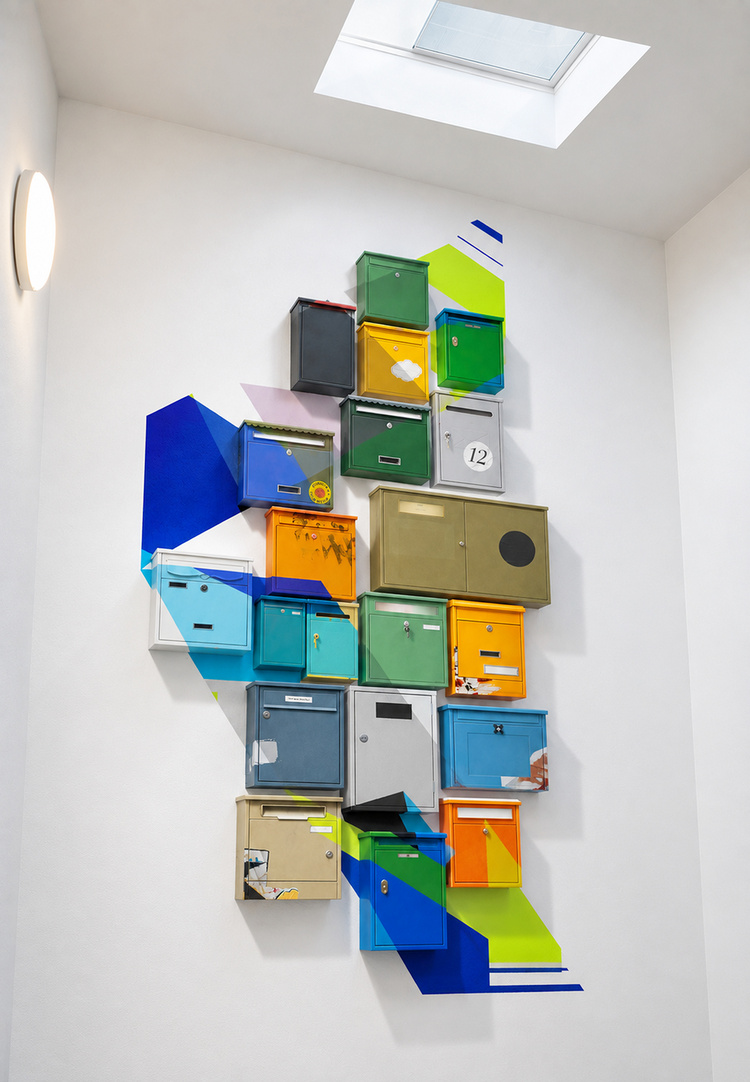
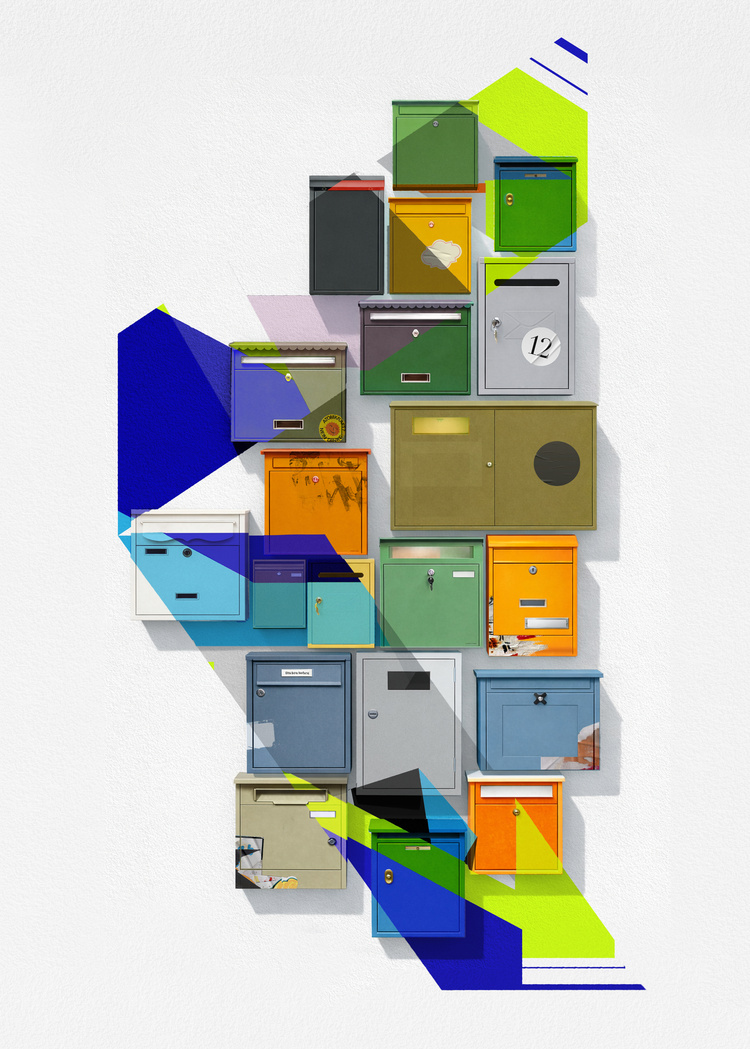
Integrated public art project at a residential facility for applicants for international protection in Hesperange - Luxemburg. This sculpture, composed of an arrangement of mailboxes, explores themes of arrival, belonging, and social participation. Each box suggests an individual presence, a voice, a history, a place within a shared environment. Together, they form a loose, open structure that reflects the transitional character of the residential space.
The mailbox becomes a powerful symbol of recognition and identity: of having an address, a name, and a place within society. It marks the shift from the temporary to the personal, from invisibility to presence. At the same time, it connects interior and exterior spaces, linking the private sphere of the residential home with the wider social world.
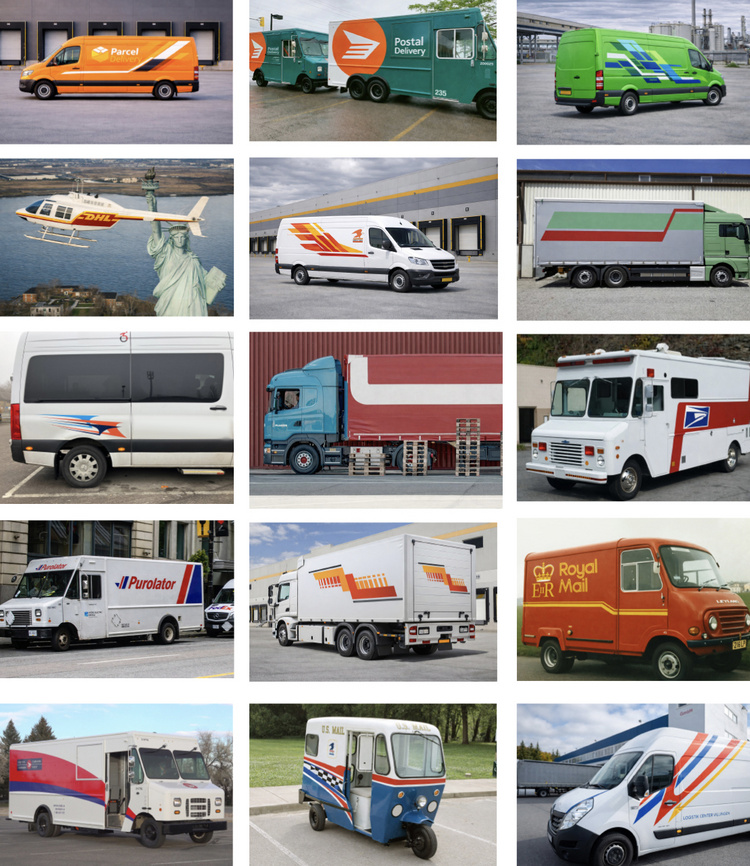
The diversity of colors, shapes, and surfaces emphasizes individuality and different life trajectories. At the same time, the layered graphic elements introduce movement and tension. Inspired by the visual language of postal and logistics vehicles—their markings, colors, and signs—these patterns evoke transport, circulation, and connection. By transferring these visual codes onto the mailboxes, the journey of the message becomes visible. In this way, the work also gestures toward the broader history of communication and transport cultures. The sculpture appears animated rather than static, carrying within it the energy of movement, travel, and transition.The project also explores the contrast between cold, soulless modern communication formats and the charm of old-school correspondence. Who doesn't remember the excitement of finding something addressed to them in the mailbox as a child?
The sculpture presents the residential home as an open, dynamic site of encounter, exchange, and possibility — a place where individuality, dignity, and belonging can emerge.
This sculpture was submitted as a competition entry but was not selected by the jury ☆゚.*・。゚. We are currently looking for another appropriate context where its artistic qualities can be fully appreciated and where a dialogue can be created.
Know a place? Get in touch.